Bienvenue sur WordPress. Ceci est votre premier article. Modifiez-le ou supprimez-le, puis commencez à écrire !
One Response
Bonjour, ceci est un commentaire.
Pour débuter avec la modération, la modification et la suppression de commentaires, veuillez visiter l’écran des Commentaires dans le Tableau de bord.
Les avatars des personnes qui commentent arrivent depuis Gravatar.
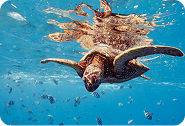
Cetaceans are the most impacted by human-induced noise in the Indian Ocean, but other species such as sea turtles and fish are also negatively affected.
It is more difficult to collect data on these species; however, scientists are increasingly working to include them in recent studies and conservation programmes.
Listen to the impact
Listen to the impact
Listen to the impact
Listen to the impact
Listen to the impact
Listen to the impact
Listen to the impact
Listen to the impact
Listen to the impact
Listen to the impact
Listen to the impact
Listen to the impact
Listen to the impact
Listen to the impact
Listen to the impact
Listen to the impact
Listen to the impact
Listen to the impact
Listen to the impact
Listen to the impact
Listen to the impact
Listen to the impact
Listen to the impact
Listen to the impact
Listen to the impact
Listen to the impact
Listen to the impact
Listen to the impact
Listen to the impact
Listen to the impact
Listen to the impact
Listen to the impact
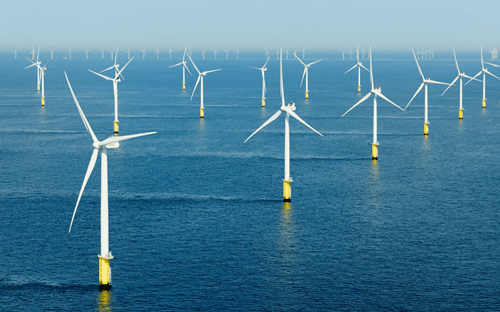
Offshore Wind Turbines
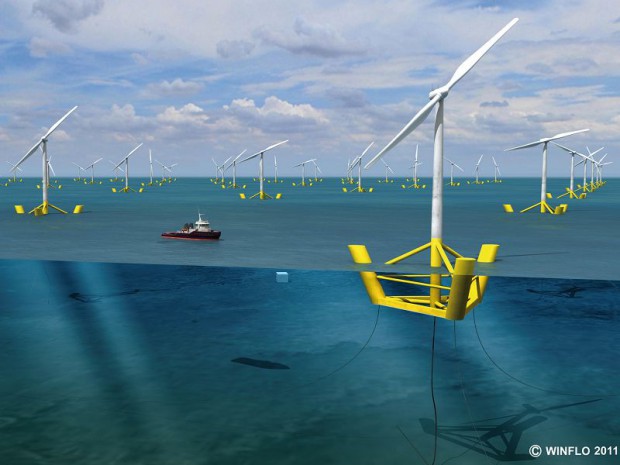
Turbine blades and engines produce continuous background noise that masks cetacean vocalisations, disturbs migrations and communication, and, over the long term, causes chronic stress.
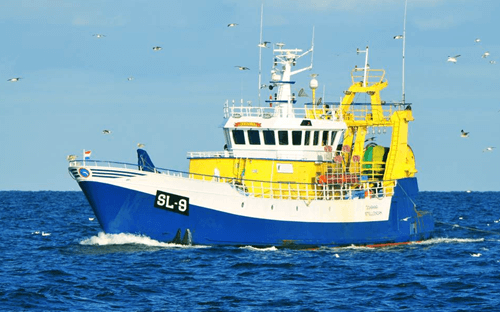
Fishing Activities
Acoustic fishing devices, such as sonars or pingers, are used to locate schools of fish and keep cetaceans away from nets, reducing bycatch. These sounds can alter cetaceans’ trajectories, disrupt their communication and orientation, and, with repeated exposure, lead to chronic stress.
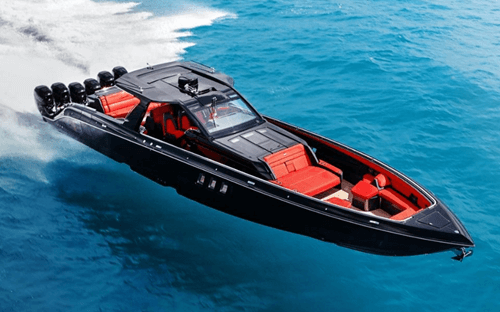
Nautical Tourism
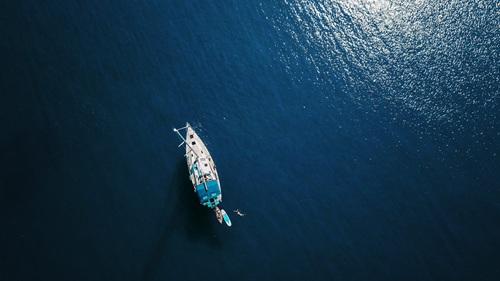
Cruise ships, excursion boats, jet-skis, and other small vessels generate noise that can mask cetacean vocalisations, stress them, and force them to flee certain areas, interfering with their feeding, resting, and reproduction cycles.
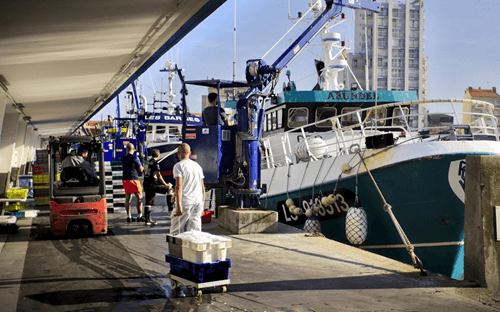
Port Activities
Heavy ship traffic, tugboat maneuvers, dredging, and loading operations add to persistent noise pollution in coastal habitats, leading to cetaceans avoiding these areas, disrupting social communication and increasing stress related to prolonged exposure.
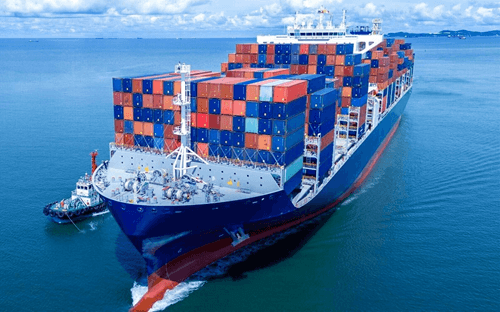
Commercial Traffic
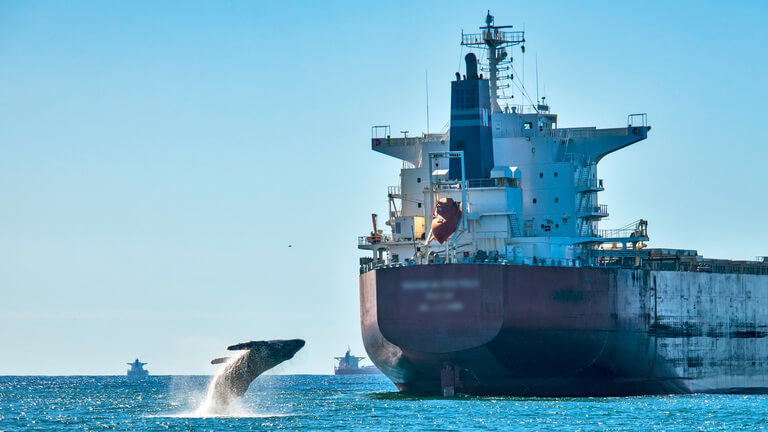
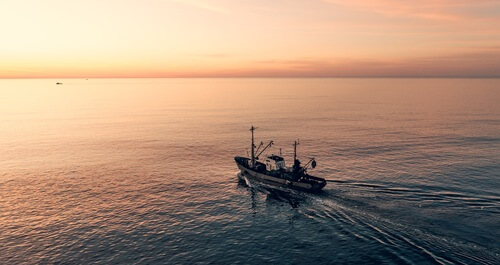
Propellers and engines produce a persistent, low-frequency hum that drowns out cetacean communications, causes chronic stress, alters feeding and reproductive behaviours, and increases the risk of collisions.
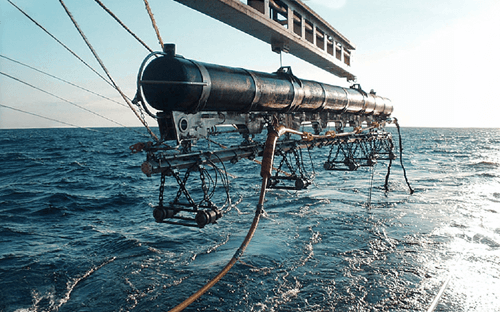
Air Guns (Seismic Source)
Seismic surveys use air guns to generate controlled energy for mapping the seabed and its resources. Repeated low-frequency detonations can scramble cetaceans’ vital signals, disturb their movements over long distances, and cause hearing damage if they are too close.
Military Activities
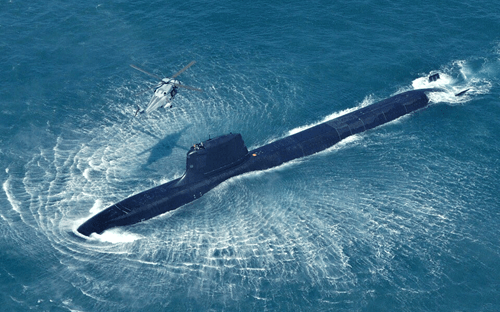
Military submarines use sonar to detect and locate underwater objects (ships, other submarines, obstacles). Sonar pulses disorient cetaceans, interfere with their communication, and can cause permanent hearing damage.
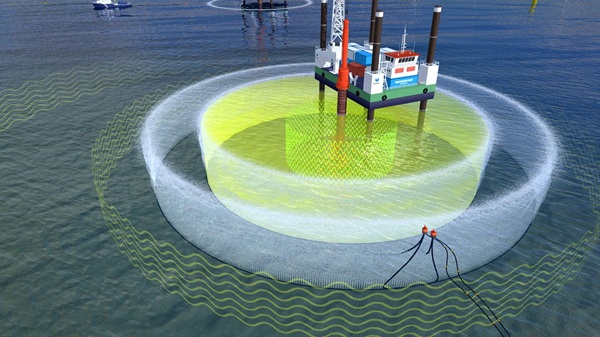
Pile Driving
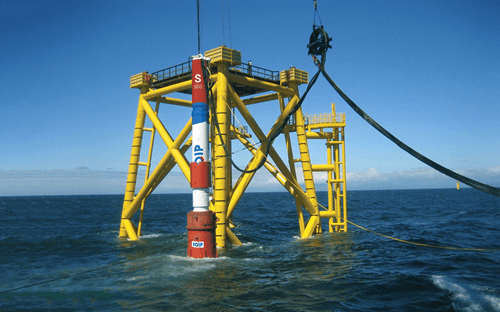
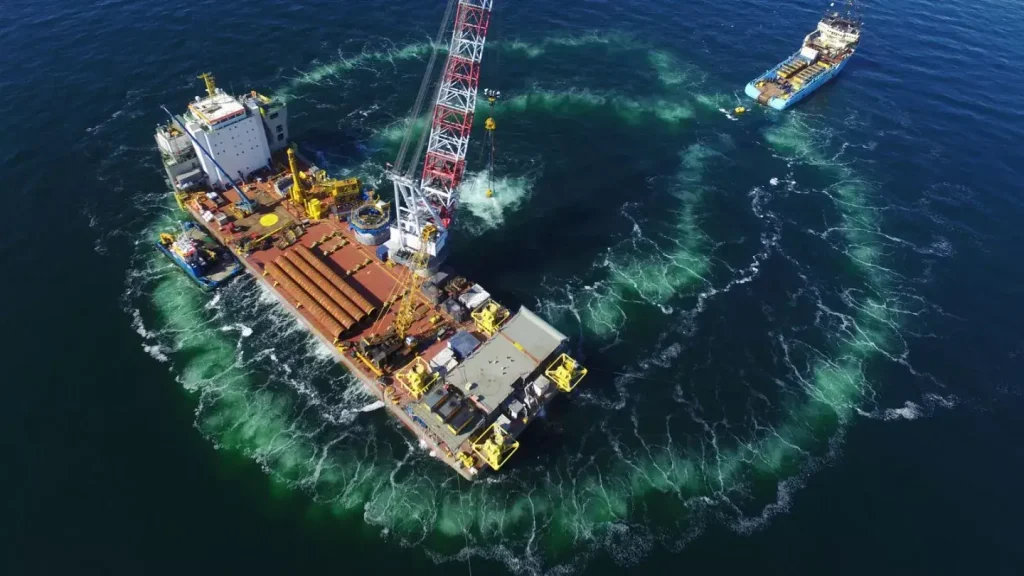
Used to build the foundation of docks, ports, and offshore wind turbines, this process involves driving large piles into the seabed. Pile driving produces intense sounds that cause cetaceans to flee, disrupt their communication, and can lead to hearing damage at high exposure.
Air Guns
Limiting exposure
Creating exclusion zones, using more gradual start-ups, and shutting down equipment in the presence of cetaceans will help limit their exposure to seismic surveys. Likewise, implement visual and acoustic monitoring in conjunction with ecological planning. Investing in quieter alternatives will also yield better long-term results.
Mysticetes
Baleen whales
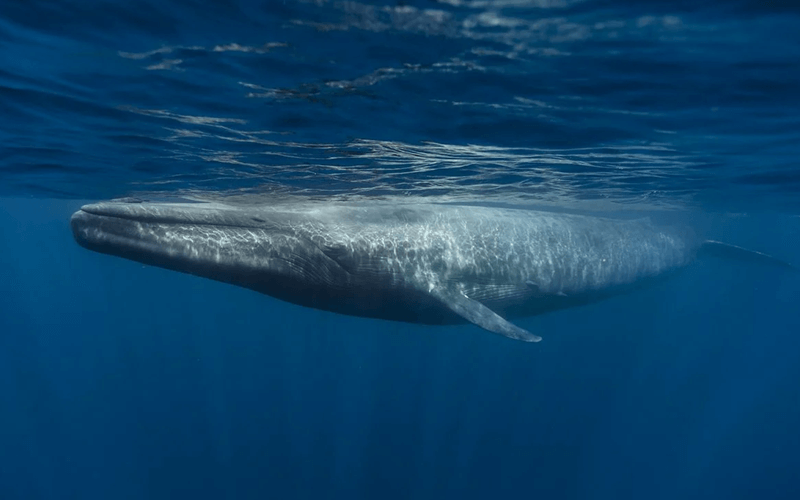
This group of cetaceans possesses baleen plates, long blades on their upper jaw, which they use to filter prey such as krill and small fish. They generally produce low-pitched sounds that travel very long distances in the ocean. This acoustic communication allows them to orient themselves, stay in contact with other individuals, and find mates.
Blue whale
Balaenoptera musculus
Odontocetes
Toothed whales and dolphin
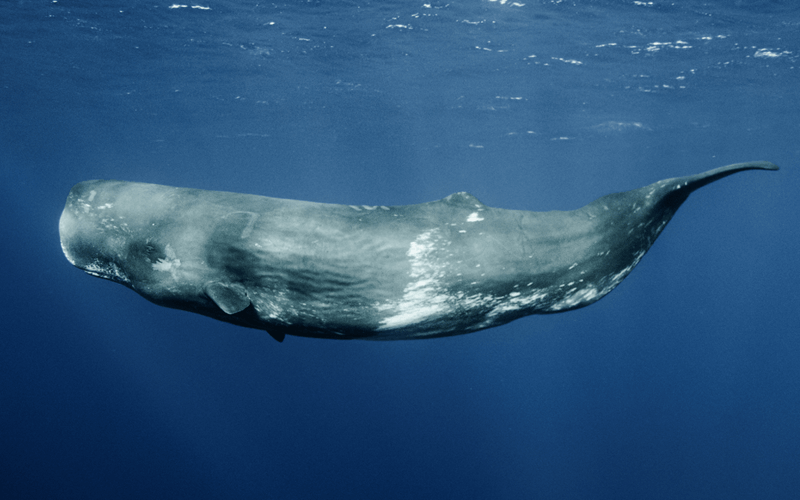
These cetaceans have teeth that allow them to actively capture prey such as fish, squid, and crustaceans. They use echolocation – a system of sounds they emit and whose echoes they interpret – to locate prey, orient themselves, and explore their environment. This highly developed acoustic ability also enables them to communicate with each other.
Sperm whale
Physeter macrocephalus
Mysticetes
Baleen whales
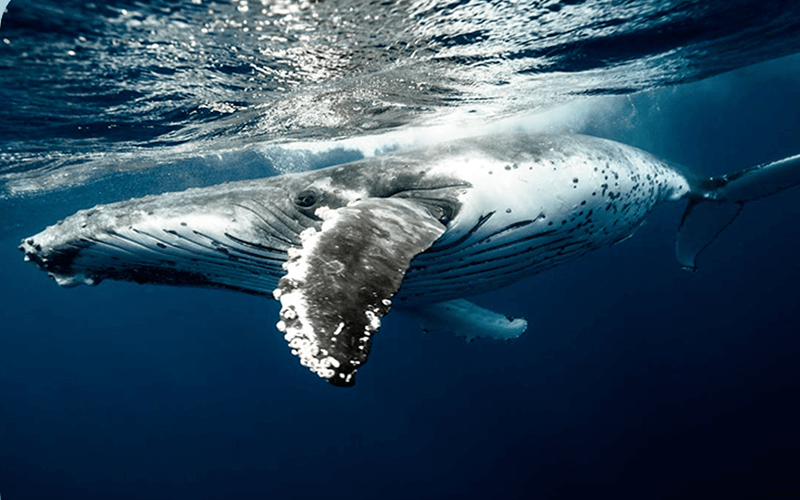
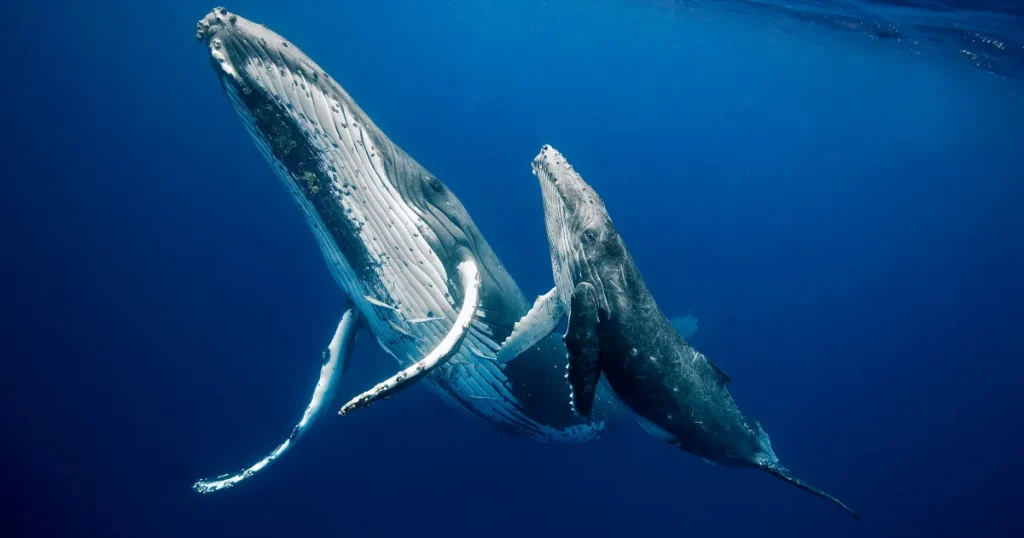
These cetaceans have baleen plates – long structures on their upper jaw – which they use to filter prey such as krill and small fish. They generally produce low-frequency sounds that can travel over long distances in the ocean. This acoustic communication enables them to orient themselves, stay in contact with other individuals, and find mates.
Humpback whale
Megaptera novaeangliae
Odontocetes
Toothed whales and dolphin
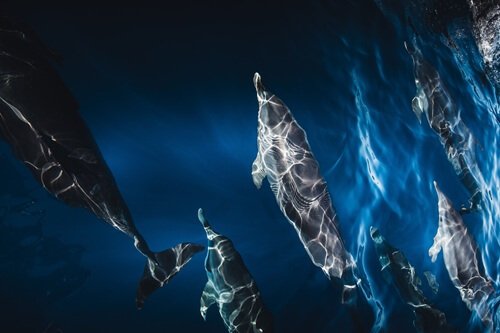
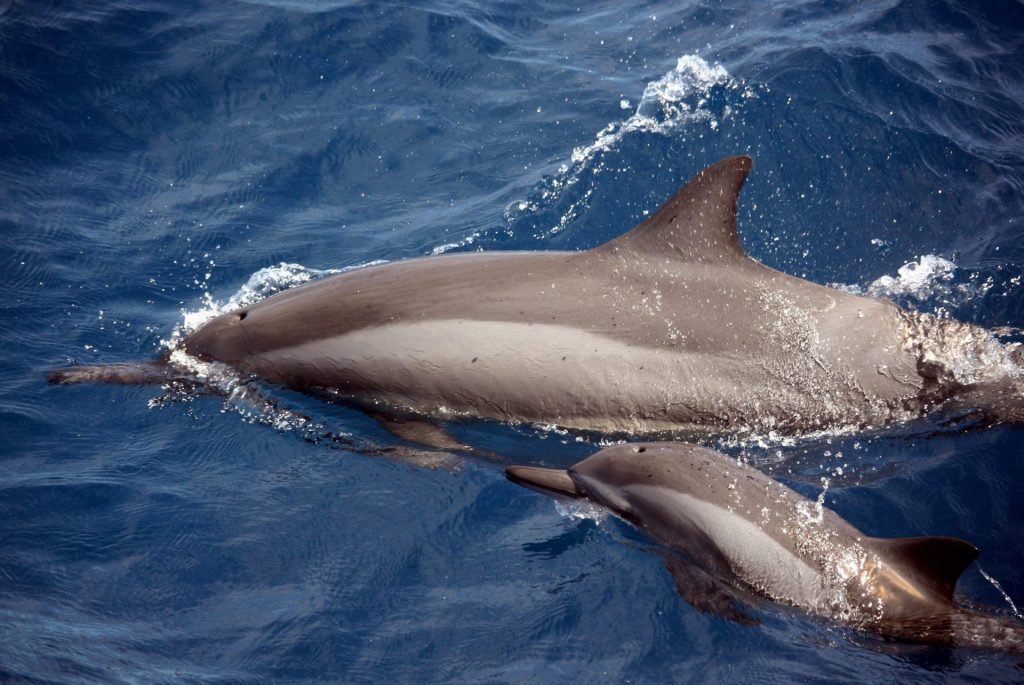
These cetaceans have teeth that allow them to actively capture prey such as fish, squid, and crustaceans. They use echolocation – a system of sounds they emit and whose echoes they interpret – to locate prey, orient themselves, and explore their environment. This highly developed acoustic ability also enables them to communicate with each other.
Spinner dolphin
Stenella longirostris
Port Activities
Limit noisy activities
Noise disturbances from port activities can be mitigated by restricting noisy work, such as piling and dredging, to periods when cetaceans are not present, by using quieter techniques (bubble curtains, noise-reducing devices), and by modernizing infrastructure to reduce noise from ships at berth.
Military Activities
Adapting exercises
To limit the impact of military activities on cetaceans, it is important to plan exercise areas and times according to animal presence. Adjusting sonar power and raising crew awareness of cetacean behaviour will help protect them more effectively.
Pile Driving
Identify sensitive periods and areas
To limit the impact of underwater pile driving, noise reduction devices (bubble curtains, soundproof bells, vibropiles, soft-start systems) are generally combined with spatio-temporal measures (ecological calendars, exclusion zones, visual/acoustic monitoring, and shutdowns if animals are present). The objective is to reduce the noise level emitted and avoid periods and areas sensitive to marine wildlife.
Commercial Traffic
Changing practices and promoting innovation
Overall impact can be reduced by lowering ship speeds, adjusting routes away from sensitive areas, and encouraging the adoption of quieter technologies, such as different hulls, propellers, and propulsion systems.
Offshore Wind Turbines
Identify sensitive areas
During the operational phase, mitigating noise generated by offshore wind turbines mainly involves reducing turbine noise and its transmission through the water column through regular maintenance of turbines and blades, the design of quieter structures and anchorages, and locating turbines outside areas of high acoustic sensitivity for cetaceans.
Fishing Activities
Adjust the power and usage
Mitigating the impact of fishing pingers and sonars involves adjusting their frequency and power so that they are effective without generating unnecessary noise, limiting their use in time and space, and favouring alternative or passive devices when possible.
Quieter Oceans Are Possible!
Underwater noise pollution is not inevitable. Reducing it depends on several complementary measures:
Lower noise at the source: designing quieter ships, maintaining propellers, limiting cavitation.
Reduce vessel speed to limit sound propagation.
Plan shipping routes to avoid sensitive areas such as breeding or feeding grounds.
Strictly regulate the use of sonars and seismic surveys.
Require mitigation techniques during offshore works (bubble curtains, gradual ramp-up).
Create acoustic marine protected areas.
Monitor with hydrophones to track noise levels.
Integrate noise considerations into maritime public policies.
Reducing noise helps restore the quality of the acoustic habitat that is essential for cetaceans.
Reducing Underwater Noise: A Major Challenge for Cetacean Protection
Cetaceans live in a world dominated by sound. Unlike humans, they rely on acoustics to communicate, navigate, find prey, and maintain social bonds. Any sound disturbance can therefore directly affect their survival. The main sources of human-generated underwater noise include maritime traffic, military sonars, offshore operations (drilling, pile driving), explosions, and certain geophysical surveys. These sounds can travel hundreds of kilometres underwater.
Their effects include:
Acoustic masking: background noise prevents cetaceans from hearing the songs, whistles, or echolocation clicks of their peers.
Physiological stress: increased cortisol, behavioural changes, and avoidance of noisy areas.
Feeding disruption: difficulty detecting prey or coordinating hunting.
Changes in migration and reproduction: abandonment of key areas.
Physical injuries (in extreme cases): exposure to very powerful sounds that can cause hearing damage or strandings.
In the long term, chronic increases in ocean noise reduce the quality of cetaceans’ acoustic habitat and can affect population dynamics. Reducing noise at sea is now a major conservation challenge.
Reducing underwater noise from maritime transport and services in the Western Indian Ocean
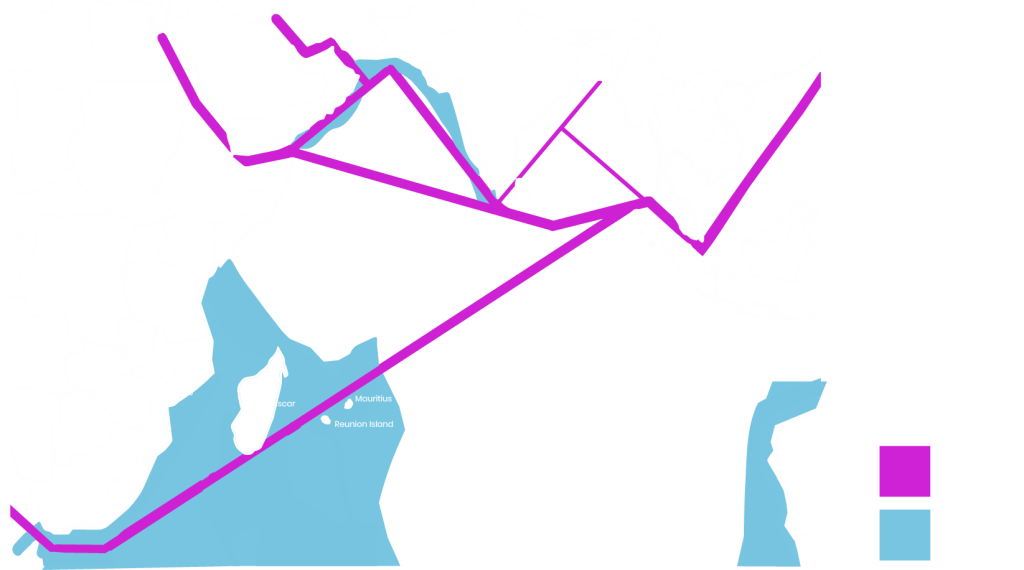
The oceans are exposed to increasing human pressures, one of the most significant being underwater noise, which affects many marine species. This noise pollution particularly impacts cetaceans, for whom sound is vital for communication, reproduction, hunting, and ensuring safety. With economic development plans in the Western Indian Ocean region relying on increased port capacity and maritime trade, noise-related threats could become even more severe for underwater wildlife by 2050. The aim of the Quieter Western Indian Ocean (QWIO) project is to promote awareness of anthropogenic (human-caused) underwater noise and explore new ways to mitigate it.
Nautical Tourism
Adopting responsible behaviours
We can reduce the noise of nautical tourism by limiting the speed and approach of boats, establishing minimum observation distances, favouring quieter engines, and raising awareness among users about respectful behaviour around cetaceans.
This site is registered on wpml.org as a development site. Switch to a production site key to remove this banner.



























Bonjour, ceci est un commentaire.
Pour débuter avec la modération, la modification et la suppression de commentaires, veuillez visiter l’écran des Commentaires dans le Tableau de bord.
Les avatars des personnes qui commentent arrivent depuis Gravatar.